The Storefront: three projects, one number to move
An e-commerce store, redesigned to lift conversion and built as three projects. This is the first.
Senior Product Designer
E-Commerce, Web & App
+22.1% conversion
The store pulled traffic but leaked sales. I dug into how parents actually shop, found where they stall, and turned those moments into three projects. Each one chases the same number: how many visits end in a cart.
Every drop-off
has a reason.
The Approach
So I started from behavior. Find why parents hesitate, fix that, and conversion follows. Three projects came out of the research. Here’s the first.
01
Recommend by the baby’s age
Pain Point
- Users: choosing for a baby is hard, and what they need shifts every few months.
- The business:it needed each baby’s age to target offers and marketing.
Opportunity
- Behavior: most app time went to the homepage hot-deal area.
- Interviews: parents wanted to see what same-age babies were buying.
Hypothesis
Put age-matched group deals where parents already spend their time, and more of them convert.
Strategy A
Collect personal info.
Ask for the baby’s age at sign-up and in the profile, with a coupon as the nudge.

Strategy B
Algorithmic recommendation.
Feed the age into the engine, then surface age-right products and what same-age babies bought.

Takeaway
A recommendation system tuned to the baby’s age. It surfaces what fits at each stage, so parents stop second-guessing and finish the cart.
+22.1% shopping conversion
02
Turn brand pages into shopping guides
Pain Point
On a brand’s page, parents can’t tell which products are the must-buys.
Opportunity
- Data:brand pages converted lower than the store’s other shopping pages.
- Interview: parents wanted the page to point them to a few must-buys.
Hypothesis
Build a shopping guide into the brand page, and more of its traffic converts.
Strategy A
Build brand power.
Lead with sales numbers, reviews, and group-buy deals, so the page proves itself fast.

Strategy B
Create shopping guides.
Spotlight the brand’s classic must-buys, so parents know what to grab first.

Strategy C
Show what’s selling.
Rank the best-sellers and flag the new arrivals.

Takeaway
A brand page that does its own selling. Sales teams keep it sharp, marketing has room to promote, and parents finally see what’s worth buying.
+2.3% shopping conversion
03
Rebuild the page that drives the most revenue
Background
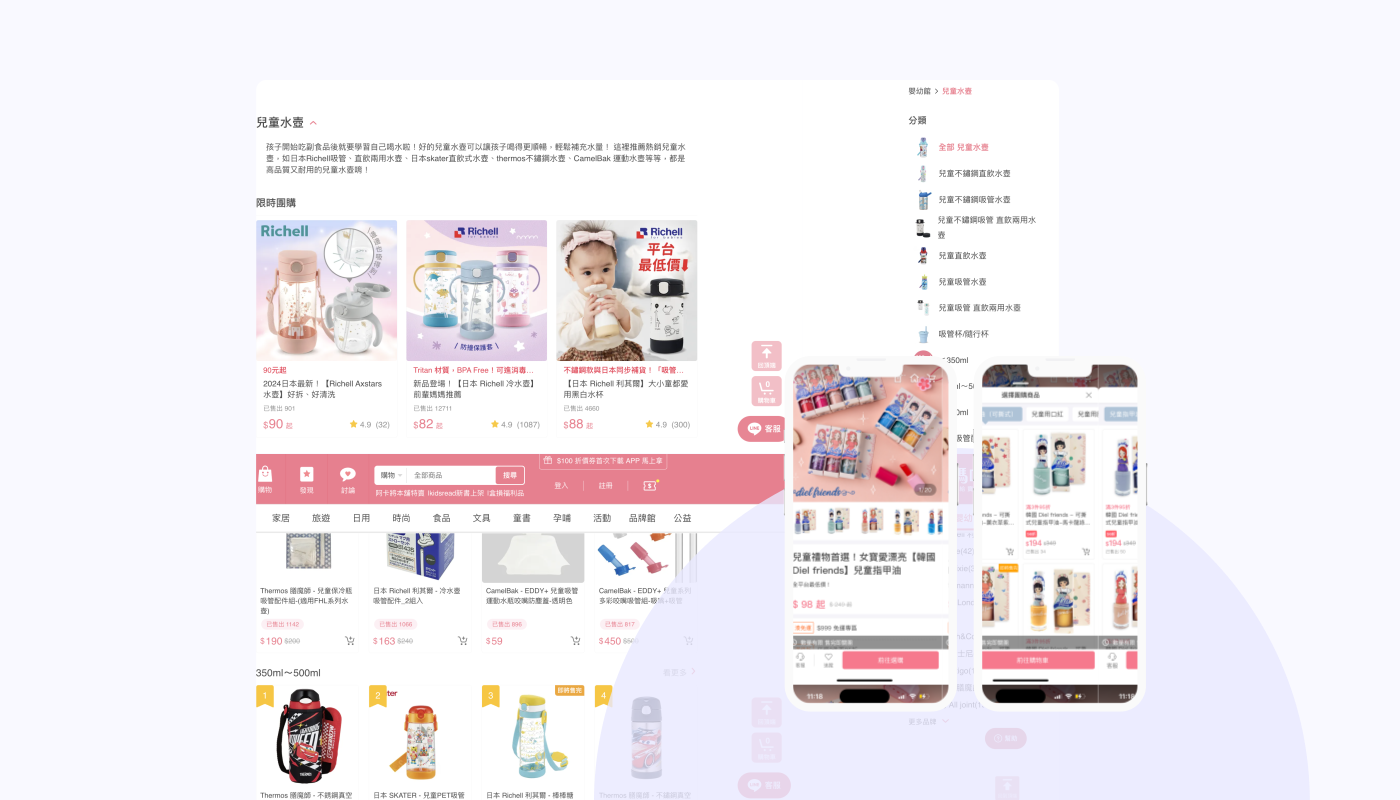
The group-buy page is the store’s core shopping page, and its biggest source of revenue.
Pain Point
- It was the store’s oldest page, and the UX showed its age.
- Nothing was tracked, so there was no data to learn from.
Opportunity
- It’s the top revenue page, so even a small lift pays off.
- Tracking baked into the new build gives future iterations something to measure.
The Stakes
This page matters too much to guess on, so every change shipped behind an A/B test.
Strategy A
Make people want to buy.
Countdowns, sale pricing, reviews, and promos, all nudging the buy.

Strategy B
Make products easy to find.
With so many group-buy items, give people faster, clearer ways to land on the right one.

Takeaway
A group-buy page rebuilt for speed: find the right product fast, buy with less hesitation, every change proven by an A/B test.
+3% shopping conversion
About A/B Testing
01
With no historical data to compare against, some results caught us off guard. The company had bet big on unboxing reviews, but engagement with them stayed low.
02
The old code couldn’t be changed piece by piece, only rebuilt whole, so too many variables moved at once for a clean test.
03
At launch the redesign converted below the old page, then passed it after a month. People seem to need time to adjust to a new interface.